Kõigil Töötajatel on Õigus olla esindatud Ametiühingu poolt!

Kõigil Töötajatel on Õigus olla esindatud Ametiühingu poolt!
У всех Работников есть Право быть представленными Профсоюзом!

вторник, 13 марта 2012 г.

Thousands join Auckland port workers rally

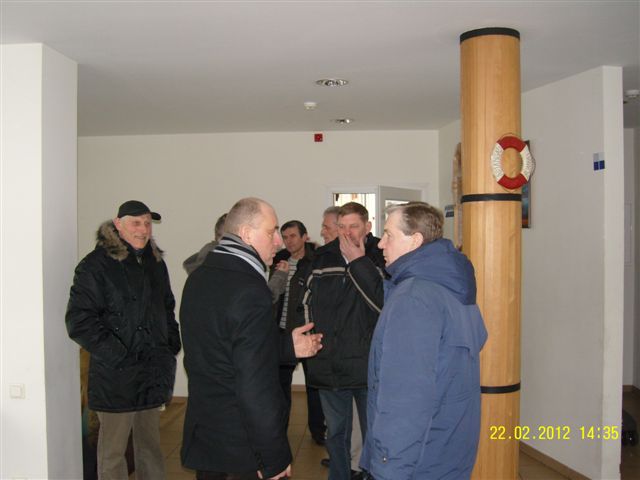
Latvian and Estonian Dockers Support Port Workers from port of Auckland!


Thousands join Auckland port workers rally

10 March 2012

Thousands of people turned out to a rally in support of Auckland workers sacked by port management.

Dockers from across the region joined the march in New Zealand on Saturday afternoon to show solidarity with members of the ITF- affiliated Maritime Union of New Zealand (MUNZ).  Others worldwide sent messages of support to workers involved in the long running dispute with Ports of Auckland Limited (POAL) which came to a head this week when POAL gave notice to the union that 300 wharfies would be made redundant and their stevedoring work contracted out.

In addition to the support of fellow port workers, the Auckland wharfies rally also attracted students, teachers, firefighters and ITF unions from across the supply chain.

ITF dockers’ section secretary Frank Leys sent a message of solidarity to the rally highlighting the worldwide support for Auckland workers fighting to secure their jobs. He said: “This is a blatant attempt at union busting and that’s something that the international trade union community just won’t stand for. And, from the turnout at this rally it’s clear it’s not just unions who think POALs treatment of Auckland workers is wrong. Workers from other industries agree that action must be taken to stop big business profiting at the expense of ordinary people who are just trying to make a living.”

Beyond the rally, international solidarity continues with messages of support flooding in to MUNZ. Resolutions of support have been signed at a number of global meetings and a protest was organised at Sydney Ports to coincide with the Auckland rally.

For more on this dispute and to show your support for Auckland wharfies visit the dedicated solidarity page >> http://www.itfglobal.org/solidarity/solidarity-3502.cfm
  
Search Auckland port rally on twitter to see pictures and comments.

Rally tomorrow for Auckland dockers

9 March 2012

Wharfies (dockers), their families and supporters will rally in Auckland tomorrow to defend jobs at the city’s port. The event has been called after news this week that the port’s management is going to try and make 320 workers redundant.

ITF dockers’ section secretary Frank Leys will be among those speaking, and will pledge the organisation’s support for the endangered workers.

He will tell them that all they have asked for is a fair deal and in return they have received “privatisation, casualisation and job insecurity from a management that has shied away from good faith negotiation and instead embraced confrontation with its own workforce”.

He will continue: “This dispute is a major turning point for trade union relations in New Zealand just like Liverpool in the UK, Patrick’s in Australia and Ports Package 1 and 2 for Europe. We are standing on the edge of a change which would mean disaster for future generations of workers. Employment with no security, no benefits and no rights to trade union protection. We can’t let that change happen.”

He will go on to promise that “400,000 dockers want the workers of Auckland to know they are not alone in this fight. They will not stand idle when their brothers and sisters are under siege. They are protesting in their ports, they are contacting their New Zealand embassies, they are letting the world know that this fight is far from over and when you take on dockers at the Ports of Auckland you take on dockers all over the world. We stand by your side in this dispute and your call for a fair deal will not be silenced.”

Earlier this week ITF president and dockers’ section chair Paddy Crumlin declared that managements’ actions had now made Auckland ‘a port of convenience’. This, he explained, “can have real consequences in how dockers worldwide react to these cargoes. And it can have consequences among seafarers, among shipping companies looking for ports where they will find efficient and co-operative loading and unloading, and potentially even among customers of New Zealand goods”.

For more details of the rally see http://www.saveourport.com/ . For more about the international support for Auckland’s wharfies see

Aqaba 2012, GNT Seminar, ITF.

 Первая информация от участника GNT Семинара ITF в Акабе В Иордане.  


На семинаре ITF по Глобальным Сетевым Терминалам, который проходит в городе - порту Акабе представлены арабские профсоюзы  и представители из Индии,
Сингапура, Шри Ланка, Австралии, Коста Рики, Бельгии, Англии, Германии и России.


Вчера, 12 марта, была принета резолюция по Окленду от участников Докерских Профсоюзов членов  ITF.


Более подробную информацию по теме Поддержки Работников Порта Окленд,
Новоя Зеландия смотри на сайте ITF:

Thousands join Auckland port workers rally


Сегодня, 13 марта, собрались представители европейских профсоюзов и решили проводить экспресс кампанию в поддержку работников порта Окленда во всех портах Европы. Координация будет проводится на уровне ITF.


Будет выбрано для кампании судно, которое делает судозаход в порт Окленд.
Название судна уточняется.
Форма акции, работа с локальными Докерскими профсоюзами и с членами экипажа, разьяснение и агитация в течение часа на борту судна о ситауции в порту Окленда с привлечением прессы.

пятница, 9 марта 2012 г.

Новости Недели Забастовок в Эстонии!

Новости Недели Забастовок в Эстонии!

Медики и моряки поддерживают учителей: их требования даже чересчур скромные

Петерсон: в Таллинне завтра встанет весь общественный транспорт

В забастовке солидарности моряков приняли участие около 50 человек

Учителя к битве с правительством не готовы

ФОТО: Тысячи учителей на площади Свободы требуют повышения зарплаты

Галерея: площадь Свободы заполнена митингующими

Фото, видео: учителя требуют повышения зарплаты на площади Свободы

FOTOD: Meremehed piketeerivad õpetajate toetuseks

"Aktuaalse kaamera" erisaade

Эстонская железная дорога подала на профсоюзы в суд


Чубаров: обращение в суд — очередной способ запугивания работников

Чубаров и Кузнецкий разъяснили, кому и почему выгоден коллективный договор

Ports of Auckland dispute escalates

Ports of Auckland dispute escalates
08/03/2012

Plans to make 300 wharfies redundant and outsource their work at the Ports of Auckland, New Zealand, have been confirmed.

Members of the ITF-affiliated Maritime Union of New Zealand (MUNZ) are currently out on strike over the proposals which weren’t made official until Wednesday. Ports of Auckland Limited (POAL) gave notice to the union that workers would be made redundant and stevedoring services contracted out, most likely within a six-week time frame.

Meanwhile the impact of the long running dispute is being felt beyond Auckland. Wharfies in Lyttleton port in Christchurch have today been ordered back to work after refusing to unload a container vessel, which had been handled by non-unionised labour in Auckland. A court injunction, the same kind used to force Wellington workers to load and unload the Maersk Aberdeen and Tauranga port staff to work on the Irenes Remedy, has been issued against members of MUNZ and the Rail and Maritime Transport Union (RMTU), forcing them to halt industrial action.

Despite the announcement, workers in Auckland have vowed to step up the campaign to safeguard jobs. A public rally has been organised for Saturday with local people being urged to show up in force to support wharfies and to keep the port in local hands.

The international arm of the campaign is also escalating. ITF dockers’ section secretary Frank Leys said: “We are standing firmly by our New Zealand brothers and sisters in this dispute. We have requested a meeting with the High Commission in London and I will be sending a message to workers and Aucklanders to be delivered during Saturday’s rally to make sure those on the ground are assured of the international support they have.”

Visit the dedicated ITF Auckland wharfies solidarity page for more http://www.itfglobal.org/solidarity/solidarity-3502.cfm .

четверг, 1 марта 2012 г.

Самые дешевые порты – в Восточной Балтике

2012-02-28, 11:18
Самые дешевые порты – в Восточной Балтике
Видмантас Матутис
v.matutis@kl.lt

В портах Литвы, Латвии, Эстонии и России появились необычные тенденции – хотя количество грузов в них растет, зарплаты докеров снижаются.

Различаются втрое

Пару лет назад координатором деятельности портов Международной федерации транспортных рабочих (ITF) в странах Балтии начал работать проживающий в Таллинне Александр Мейер.

По его словам, он хорошо проанализировал ситуацию с заработной платой докеров в портах России и стран Балтии. Наименьшие зарплаты в эстонских портах – до 950 евро в месяц, в портах России, Литвы, Латвии – около тысячи евро в месяц.
Это стандартные зарплаты, когда выполняются определенные установленные нормы.
Зарплаты зависят и от компаний, переваливаемых грузов, коллективных договоров. Наименьшие зарплаты – на терминалах перевалки угля. В Клайпеде уголь не переваливают, его количество снижается значительно в эстонских портах. Основные порты перевалки угля – Рига и Вентспилс.

Сравнительно невысокие зарплаты докеров стран Восточной Балтики стали головной болью портов Скандинавии. Их профсоюзы опасаются эмиграции портовых работников. Через ITF делаются шаги к тому, чтобы в странах Восточной Балтики, где докерам платят наименьшую зарплату, она повышалась. Повышение заработной платы докерам в этих странах получило отрицательную реакцию со стороны властей.

По словам А.Мейера, правительства стран Балтии давят на работодателей порта, чтобы не повышали зарплат. Суммарный размер зарплат в этих странах очень низок. Власти опасаются, что если значительно поднять зарплату докерам, повышения зарплат потребуют и другие граждане.

Сегодня минимальная заработная плата в Финляндии составляет тысячу евро, тогда как в Эстонии – 290 евро. В Литве и Латвии минимальная заработная плата еще ниже.
В Финляндии, которая славится решением проблем методом забастовок в портах, предусмотрены два постоянных стандарта зарплат докеров – низший (2700–3000 евро) и высший (3000–3500 евро). Такие зарплаты докеры получают за стандартное время работы – по восемь часов пять дней в неделю. За работу по вечерам, ночам или во время выходных выплачиваются надбавки.

Государства – за единство

Считают, что грузовые тарифы в портах Скандинавии и стран Восточной Балтики похожи, поэтому и зарплаты должны быть схожими.

Почему они различаются втрое? По мнению А.Мейера, так сложилось потому, что в Скандинавских странах очень сильные портовые профсоюзы. Новый человек, пришедший работать в порт, в течение 3–4 дней принимается в профсоюз.
В этих странах законы поощряют профсоюзное движение. Сам работодатель вынуждает работника стать членом профсоюза – иначе ему придется платить за работника взнос профсоюзу. Работник после вступления в профсоюз этот взнос платит сам.

Неудивительно, что в Финляндии, по словам А.Мейера, 95 % портовых работников, в том числе и администрации, являются членами профсоюзов. Профсоюзы там считаются формой управления демократического государства.
В Эстонии членами профсоюзов является 7 % портовых работников, в Литве – около 10 %, в Латвии – около 20 %.

Портовики боятся вступать в профсоюзы. Руководители стивидорных компаний «давят» на работников, чтобы те не вступали в профсоюзы. В некоторых портах постсоветских стран создаются так называемые желтые или карманные профсоюзы.

Так произошло в российском порту Усть-Луга. В этом порту с работы был уволен один из руководителей профсоюза, принимавший участие в конференции в Клайпеде. Ему было неофициально сказано, что администрация не одобряет его визиты в порты конкурентов.

В странах Восточной Балтики докеры более организованы. В профсоюзах они составляют от 40 до 60 % от числа всех докеров.

Похожая тенденция отмечается и в Клайпедском порту. Из работающих в порту приблизительно 600 докеров членами профсоюзов являются около 300. В настоящее время в Клайпеде действуют два профсоюза работников порта – объединяющий докеров Клайпедской морской стивидорной компании (KLASCO) Профсоюз докеров и профсоюз «Уостининкас», объединяющий работников других портовых компаний.
В одном портовом профсоюзе около 200 членов, в другом – 106. За последний год из профсоюза в результате давления со стороны администраций стивидорных компаний вышло несколько десятков членов.

Новые неблагоприятные тенденции

А.Мейер предупредил, что в портах Эстонии появляются неблагоприятные для стивидорных компаний тенденции. Создаются новые стивидоры, которые наполовину снижают расценки в порту. Конкретный случай зафиксирован в эстонском порту Мууга. В подобные компании докеров принимают на временную работу и платят им значительно более низкую зарплату.

Клайпедские докеры упоминали, что неприемлемые тенденции уже появились и в Клайпедском порту – даже опытным докерам говорят: если не нравится зарплата – можешь уходить, найдется, кем заменить.

Другая тенденция – с приходом в порт новых грузов, с ростом объемов грузовых работ повышения заработной платы докеры не ощущают. В портовых компаниях созданы непонятные докерам нормы оценки их работы.

В некоторых компаниях Клайпедского порта атмосфера в бригадах докеров очень непростая. Система создана таким образом, что зарплата бригадиров зависит от выполненной докерами работы. Бригадиры оказывают давление на докеров, объясняя, что они являются представителями администрации.

В компаниях также есть и так называемые начальники смен, которых считают ничего не делающими надсмотрщиками. Почему так много начальников? Почему не доверяют докерам?

«В европейских портах докеры – это уважаемые люди. В Эстонии, если ты работаешь в порту, тебя считают неудачником. Мы должны стремиться к тому, чтобы и в наших странах профессия докера стала престижной», – рассуждал А.Мейер.

Как в Эстонии, так и в Литве докеров приравнивают к неквалифицированной рабочей силе. В действительности докеры являются работниками высокой квалификации, поскольку часто работают с очень сложной грузовой техникой. Профессиональный статус докеров не определен ни в Литве, ни в Эстонии.

Во многих странах докеры выходят на пенсию на пять лет раньше установленного срока. Их работа считается опасной. Установка более раннего выхода докеров на пенсию преобладает в России. В странах Евросоюза, согласно его конвенциям, опасных работ как бы не может быть. Поэтому докерам сложно доказать свои профессиональные заболевания.

В действительности работа докеров является опасной – она ведется и в жару, и в лютую стужу, и в дождь, и в снег, и в облаках пыли. Однако от работодателей докеры часто слышат: работаете на свежем воздухе, у моря, где воздух насыщен йодом – другие люди специально едут на курорты, чтобы побывать в таких условиях, в которых работают докеры.

Комментарии

Антанас Барусявичюс
Руководитель профсоюза «Уостининкас»

Большой проблемой является то, что у нас докеры должны выполнять самую различную работу. Когда сегодня они таскают мешки, а завтра садятся на кран, велика вероятность потери квалификации. В западноевропейских портах специализация докеров значительно уже.

У нас большая часть докеров – из «Клайпедос Смяльте». Заработная плата докеров KLASCO выше, но они не хвалятся, по сколько часов работают. В этой компании зарплата докеров зависит от количества перегруженных тонн. Зарплата крановщиков «Клайпедос Смяльте» одно время составляла 30 литов в час. Сейчас она несколько снизилась. Докеры второго класса получают 16 литов в час, третьего – 14 литов. Плюс предусмотрены надбавки за сверхурочную работу, премии. На небольшом терминале Дровяной бухты заработная плата основных портовых работников составляет 20,5 лт за час, подсобных – 16 лт.

Когда у нас будут зарплаты, как у финских докеров, сложно сказать. Это зависит и от работников порта, немалая часть которых не вступает в профсоюзы и не борется за свои права. И власти не заинтересованы в сильном негосударственном секторе. Профсоюзы являются головной болью властей. Это доказывает и пример Греции.

Владимирас Бендорайтис
Председатель Профсоюза докеров

Наш профсоюз объединяет только работников KLASCO. Новых членов профсоюза немного. Молодые люди не хотят работать докерами. Они легче зарабатывают где-нибудь за границей на фасовочных предприятиях эти 3,5 тыс. литов, которые докер получает «на бумаге». Наиболее высокооплачиваемые докеры KLASCO работают на Морской переправе. На грузовом терминале или терминале удобрений сегодня не хватает работы. Когда ее нет, зарплаты снижаются. Однако когда грузооборот растет, докеры также не ощущают его рост на зарплате.

Главная проблема профсоюзов порта – государство не в состоянии, а вероятно и не желает ратифицировать международные конвенции о труде докеров и санитарных условиях в порту. В Литве не упорядочена законодательная база условий труда докеров и работников порта. Хорошо, что появился координатор ITF в странах Балтии. Объявлена кампания против дешевых портов. Вероятно, дела в регионе с огромной инерцией сдвинутся с места.

По сравнению с другими европейскими странами, наш регион выглядит неприглядно. Зарплаты докеров в три раза ниже зарплаты скандинавов. Даже в Хорватии – стране, где шла война и которая не является членом ЕС, заработная плата докеров значительно выше, чем в регионе Восточной Балтики. Там она превышает 2,5 тыс. евро.
Положение работников нашего порта даже хуже существующего в России. Там осталось много прежних законов, обеспечивающих благоприятные условия для работников. У нас система приведена в беспорядок, работодателям предоставлено много свободы.

Месячная зарплата докеров в портах в евро

Страна              Зарплата

Эстония            880–950EUR
Россия               900–1000EUR
Литва                900–1000EUR
Латвия              900–1000EUR
Финляндия       2700–3500EUR
Швеция            около 3000EUR
Нидерланды     около 4000EUR
Германия          около 3500EUR
Дания                около 3500EUR

Представлено по данным координатора деятельности портов ITF в странах Балтики Александра Мейера.

The cheapest ports in the Eastern Baltic

2012-02-29, 15:11
The cheapest ports in the Eastern Baltic

Vidmantas Matutis
v.matutis@kl.lt

There are new tendencies in the ports of Lithuania, Latvia, Estonia and Russia: although the number of cargo is increasing, the salaries for dockers are in decline.

The difference of three times

Alexander Meyer has started working as an ITF (Transport Workers Federation) coordinator for the Baltic countries two years ago. He lives in Tallinn. He claims to have well researched the situation of dockers’ salaries in Russian and Baltic ports. The lowest salaries are in Estonia (up to 950 euro); Russia, Lithuania and Latvia have more or less similar salaries of up to 1000 euro. These are standard salaries for certain norms. Salaries also depend on a company, amount of handled cargo and collective agreements. The lowest salaries are in coal handling terminals. Klaipeda does not handle coal and Estonia sees a decline in their coal handling. The main ports for coal handling are those of Riga and Ventspils. The low salaries of the Baltic ports have become a problem for Scandinavian ports. Their unions are afraid of influx of migrant workers. ITF implements steps in order to raise minimum wages for dockers in the Eastern Baltic countries. The idea of increasing salaries for dockers receives a lot of negative reaction from the governments. Alexander Meyer claimed that the governments are pushing employers not to increase salaries for dockers. The average salaries are low in all of these countries. The governments are afraid that when the salaries for dockers are increased, the same tendency can be applied by other employees.

Today, the minimum wage in Finland is 1000 euro, while in Estonia it is 290 euro. The minimum wages are even smaller in Lithuania and Latvia. Finland, which is famous for dockers’ strikes, has two standards for their wages: the lower (2700-3000 euro) and the higher (3000-3500 euro). Such salaries are received by dockers for standard work of five days per week and eight hours per day. There is also a possibility to receive extra payments for additional work and work on weekends.

The countries are promoting unity

It is believed that cargo tariffs both in Scandinavian and Baltic countries are similar, therefore, the salaries have to be also similar. Why they differ three times in reality? Alexander Meyer thinks that this is due to the fact that professional unions are much stronger in the Scandinavian ports. When a new employee is hired, he becomes a member of a union within three days. These countries also encourage the movements of professional unions. The employer requires from an employee to join union, otherwise the company has to pay itself for employee. An employee becomes a part of union and pays that fee himself. Thus, it is not surprising that in Finland 95 per cent of dockers, including administration, are members of the union. In these countries, professional unions are considered to be a part of democratic system. In Estonia, 7 per cent of dockers are members of professional unions; in Lithuania – 10 per cent and in Latvia – 20 per cent.

Dockers are afraid to join professional unions. The managers of stevedoring companies are pushing their workers not to join such unions. In some ports of the post-Soviet countries, the so-called “yellow” professional unions are created. The same thing happened in the port of Ust Luga. Chairman of a union was fired because he attended a conference in Klaipeda. He was told by his superiors that they are not going to tolerate his visits to competing ports. Dockers are a bit more organized in other Eastern Baltic ports. Their membership in various unions makes up from 40 to 60 per cent.

The similar tendency is also in the port of Klaipeda. Out of 600 dockers in the port of Klaipeda, 300 hundred are union members. Currently, there are two dockers’ associations, KLASCO dockers uniting “Dockers Professional Union” and another association uniting all the other dockers called “Uostininkas” (“Docker” eng.).  Dockers Professional Union has 200 members and Uostininkas has 106 members. During the last years, a lot of members left both organizations due to the pressure of their employees.

Unfavorable new trends

Mr. Meyer warns that Estonian ports see unfavorable trends for cargo handling companies. New cargo handlers are appearing, which manage to reduce port charges by half. The particular case has been recorded in the Estonian port of Muga. Dockers are accepted as temporary workers and they receive lower salaries. Klaipeda dockers also mentioned the same conditions: such tendencies are also appearing in Klaipeda and some of the dockers are offered to leave their jobs, on the grounds that some other workers will be found to take one’s place.

Another trend is that upon the arrival of more cargo in the ports, the wages for dockers are not increasing. The port companies have created work evaluation rates that are a complete mystery for employees. In some of the Klaipeda port companies, the atmosphere among fellow dockers is especially negative. The system is such that salaries of senior dockers are dependent on the amount of work done by dockers. Senior dockers are pushing dockers to do more work, explaining that they are in charge.

The companies also have shift bosses which are seen as idle supervisors. Why so many bosses? Why distrust dockers?

“In European ports, dockers are valued people. In Estonia it is considered to be a shame to work in docks. It means that you are a loser. We have to strife and achieve better status for dockers and their profession,” – considered Mr. Meyer.

Both in Estonia and Lithuania, dockers are compared to unskilled workers. In reality, dockers are highly skilled workers working with extremely difficult handling equipment. Dockers’ professional status is defined neither in Estonia nor in Lithuania. In many countries, dockers are released to pension five years earlier than others. Their work is considered to be dangerous. The same trend to release dockers earlier is maintained in Russia. According to the European Union’s conventions, there should not be any dangerous works. Therefore, dockers found it hard to prove their professional injuries.

In reality, the work of dockers is dangerous. The work continues during the extreme weather conditions whether it snows or rains. They are surrounded by an enormous amount of dust clouds. However, dockers are hearing somewhat sarcastic remarks of their employees that they are working near the sea, where the weather is saturated with iodine, as if it was a spa.

Commentaries

Antanas Barusevicius
Director, the Trade Union of Dockers, “Uostininkas”

The biggest problem is that our dockers have to do a wide range of activities. If today you are carrying bags and tomorrow you are going to work on a crane, this means a possible loss of qualifications. In the Western ports, dockers are much more specialized.

 The majority of our dockers come from Klaipeda Smelte. The salaries of KLASCO dockers are higher but they are not boasting about their work hours. The company measures their payments, according to the amount of handled cargo.

The salary of Klaipeda Smelte crane operator was 30 LTL per hour. Now, the salary has decreased. Second class dockers receive a payment of 16 LTL per hour, third class dockers – 14 LTL per hour. In addition to this, there are bonuses and extra payments. In a small Malku bay terminal, the salaries for dockers are 20.5 LTL per hour and 16 LTL for additional employees. It is hard to say when our salaries reach the levels of

Finnish dockers. This also depends from dockers, who are not participating in dockers’ unions. The Government is not interested in non-governmental sector. The unions are a headache for the Government. This is also proved by the Greek example.

Vladimiras Bendoraitis
Chairman, the Trade Union of Dockers, “Dockers Professional Union”

Our union unites only the workers of KLASCO. There are not too many joining members. Young people do not want to work as dockers. Somewhere, in a foreign factory, they tend to earn those 3.5 thousand LTL much more easily than here in the docks. The best paid KLASCO dockers work in the Sea Ferry. There is not enough work in cargo and fertilizer storages. When there is no work, the payments are decreasing. However, when the cargo handling is increasing, the dockers do not experience any growth in their income as well.

The biggest problem for trade unions is our Government’s indecision to ratify international agreements on dockers and their work and health conditions. Lithuania has not succeeded in managing legislative framework of dockers’ work conditions. It is good that there is now an ITF coordinator for Baltic countries. A campaign on cheap ports was launched. We hope that the conditions in our fast-changing region will change.

Compared to other European countries, our region seems to be very poor. The salaries of dockers differ in three to four times compared to Scandinavian. Even in Croatia, a country which is not a part of EU and devastated by war, the salaries of dockers are higher. The difference is about 2.5 thousand euro. The conditions of our dockers are even worse than in Russia. The country has some of its old laws providing protection for dockers. Our system is chaotic and a lot of powers are transferred to employers.

Dockers’ wages per month (in euro)

Country           Wage

Estonia             880-950EUR
Russia              900-1000EUR
Lithuania          900-1000EUR
Latvia               900-1000EUR
Finland             2700-3500EUR
Sweden                     About 3000EUR
The Netherlands        About 4000EUR
Germany                   About 3500EUR
Denmark                   About 3500EUR